Month: July 2026

Strengthen Your Position Before Applying for CQC Support This Season

Preparing your home care agency for CQC registration this season demands more than ticking boxes. Strengthening your governance, leadership, and documentation upfront can save months of uncertainty and avoid common setbacks. This guide will help you build a solid foundation before applying for CQC support, so you move forward with confidence and clarity. Download our CQC Readiness Checklist and book a complimentary consultation to set your next steps in motion.

Strengthening Governance and Leadership

Building a solid governance framework and leadership team is your first step towards a successful CQC registration. This stage lays the foundation for everything that follows.

Building Strong Leadership Foundations

Strong leadership is crucial for any care service. It ensures that your agency operates smoothly and meets all regulatory requirements. A strong leadership foundation begins with defining clear roles and responsibilities for your team. This clarity helps everyone understand their duties and how they contribute to the overall mission.

Next, focus on training. Provide regular opportunities for your leaders to enhance their skills, keeping them informed about the latest developments in care standards. This continuous learning approach creates a culture of excellence that permeates the entire organisation. Remember, effective leadership isn’t about wielding power; it’s about inspiring your team to deliver the best care possible.

Ensuring Effective Care Governance

Care governance involves overseeing the quality and safety of care your agency provides. It’s about establishing policies and procedures that guide your operations. Start by developing a comprehensive set of policies that cover every aspect of your service. These policies should reflect the standards set by the CQC and be regularly reviewed to remain up-to-date.

Implement a robust system for monitoring and evaluating your services. This might include regular audits, feedback from service users, and staff evaluations. By actively monitoring your services, you can identify areas for improvement and address them promptly, ensuring a high standard of care at all times.

Preparing the Nominated Individual

The Nominated Individual plays a critical role in your agency. They are responsible for ensuring compliance with the CQC’s regulations. Preparing your Nominated Individual involves equipping them with the knowledge and skills needed to fulfill their duties effectively.

Start with a thorough understanding of the CQC’s five key questions. These questions focus on the safety, effectiveness, care, responsiveness, and leadership of your service. Training your Nominated Individual to address these areas during assessments can make a significant difference in your CQC registration process.

Enhancing Documentation and Service Readiness

Once your governance and leadership are in place, focus on enhancing your documentation and overall service readiness. These elements are crucial for a smooth CQC application process.

CQC Policies and Procedures Essentials

Your agency’s policies and procedures are the backbone of your CQC registration. They ensure that your service operates within the regulatory framework. Begin by reviewing existing policies to ensure they align with CQC standards. If gaps exist, update them accordingly.

Consider utilizing external resources or consulting services to develop tailored policies that reflect best practices and compliance requirements. This investment will pay off by providing a clear, organised framework for your operations, making it easier to demonstrate compliance during CQC assessments.

Completing the Provider Information Return PIR

The Provider Information Return (PIR) is a vital document in the CQC registration process. It provides an overview of your services, helping the CQC understand your operations. Completing the PIR requires attention to detail and accuracy.

Gather comprehensive data on all aspects of your service to ensure that the PIR is complete and reflects your operations accurately. This might include information on staffing, service user demographics, and care outcomes. By providing a thorough PIR, you make a strong case for your agency’s readiness and commitment to quality care.

Service Readiness for TDDI Regulated Activity

Introducing Treatment of Diseases, Disorder, and Injury (TDDI) services requires careful preparation. This expansion offers new opportunities for your agency but comes with additional regulatory requirements.

First, ensure that your staff is trained and qualified to deliver TDDI services. This includes understanding specific care protocols and maintaining up-to-date certifications. Next, revise your policies to incorporate TDDI-specific procedures, ensuring they align with CQC guidelines. By thoroughly preparing for this expansion, you position your agency to meet new challenges and provide high-quality care.

Navigating the CQC Application Process

With governance, documentation, and service readiness in place, it’s time to focus on the CQC application process itself.

Preparing for the Fit Person Interview

The Fit Person Interview evaluates the capability and suitability of individuals leading your service. Preparing for this interview involves understanding the CQC’s expectations and standards.

Conduct mock interviews to simulate the actual process. This practice helps individuals become comfortable with the interview format and anticipate potential questions. Focus on demonstrating a commitment to quality care, understanding of regulatory requirements, and readiness to lead effectively.

Crafting a Comprehensive CQC Application Checklist

A thorough application checklist ensures that you meet all necessary requirements for CQC registration. This checklist should cover every aspect of your agency, from staffing and service delivery to policies and governance structures.

Work with a consultant or use CQC resources to develop a detailed checklist. This ensures that no critical element is overlooked, increasing your chances of a successful application. A comprehensive checklist acts as a roadmap, guiding you through the complex registration process with clarity and precision.

Addressing Common Pitfalls in CQC Registration

Understanding common pitfalls in the CQC registration process can save you time and prevent delays. One frequent issue is incomplete documentation. Ensure that all forms and supporting documents are filled out accurately and completely.

Another common pitfall is inadequate preparation for the Fit Person Interview. As mentioned earlier, conducting mock interviews and reviewing potential questions can help mitigate this risk. By proactively addressing these challenges, you set your agency on the path to a successful and smooth CQC registration.

Frequently Asked Questions

What are the key responsibilities of a Nominated Individual?

A Nominated Individual ensures compliance with CQC regulations. They must understand care standards and lead the agency in delivering safe, effective services.

How can I improve my agency’s care governance?

Enhance care governance by developing comprehensive policies, conducting regular audits, and gathering feedback from service users to identify areas for improvement.

What is the Provider Information Return (PIR)?

The PIR is a document that provides the CQC with an overview of your agency’s services, including staffing, demographics, and care outcomes. It is crucial for demonstrating service readiness.

Why is training important for TDDI services?

Training ensures that your staff is qualified to deliver TDDI services. It involves understanding specific care protocols and maintaining relevant certifications.

How do mock interviews help with CQC registration?

Mock interviews simulate the Fit Person Interview process, helping individuals practice answering questions and demonstrating their readiness to lead a care agency.


Secure your growth spot now with limited-time expert consultancy offers before the mid-year deadline.

How to Win Your First Clients and Build Trust in a New Home Care Service

Winning your first clients in a new home care service demands more than just good intentions—it requires a clear, compliance-driven plan to build trust from the start. Many new providers struggle to attract those initial 10 to 20 clients while juggling CQC Registration support and fit person interview preparation. This guide lays out practical steps tailored for your domiciliary care start-up in the UK, helping you establish credibility and steady growth with confidence. For further insights, check out this resource.

Laying the Foundation for Trust

Starting a home care service means laying a strong groundwork that fosters trust and confidence. This foundation involves understanding key registration requirements and setting up the right systems from the beginning.

Navigating CQC Registration Support

Securing your CQC registration is a critical first step. To succeed, you must understand each requirement. CQC registration support ensures you meet all criteria, covering five key questions: Safe, Caring, Effective, Responsive, and Well-led. You’ll need to prepare documents like DBS checks and a Statement of Purpose. It’s essential to show you’re ready for the registered manager interview; mock interviews can help you prepare effectively.

Developing Key Policies and Procedures

Policies and procedures form the backbone of your service. They ensure compliance and guide daily operations. Start with foundational documents: safeguarding, infection control, and medication handling. Tailor each policy to your service’s specifics. This not only keeps you compliant but also builds trust with clients.

Enhancing Client Onboarding Process

A smooth onboarding process sets the tone for your client’s experience. Begin by clearly explaining your services and setting expectations. Create a welcoming introduction session to answer questions and gather important client information. Efficient onboarding shows clients they are valued and fosters initial trust.

Strategies to Attract First Clients

With a solid foundation, it’s time to focus on attracting clients. Developing targeted strategies will help you reach your initial client base and set the stage for growth.

Effective Home Care Agency Marketing UK

Marketing effectively can make a significant difference. Start by crafting a compelling story about your service and its benefits. Use social media platforms like Facebook, YouTube, and TikTok to share your message. Engaging content can capture potential clients’ attention and encourage them to reach out.

Leveraging Local Authority and NHS Referrals

Securing referrals from local authorities and the NHS can provide a steady stream of clients. Establish connections with these organisations to showcase your service quality. Building these relationships takes time but can lead to consistent referrals. They trust services that demonstrate reliability and compliance.

Crafting Person-Centred Care Plans

Personalised care plans are crucial for client satisfaction. Tailor each plan to the individual’s needs and preferences. This approach shows clients that they are not just another number. It builds loyalty and encourages positive word-of-mouth referrals.

Building Credibility and Sustaining Growth

As your client base grows, focus on building credibility and ensuring sustainable growth.

Quality Assurance in Domiciliary Care

Quality assurance is essential for maintaining high standards. Regular audits and feedback mechanisms can help identify areas for improvement. Implementing changes based on feedback demonstrates commitment to quality, which enhances client trust.

Registered Manager Preparation Essentials

A well-prepared registered manager is vital for success. They should understand compliance requirements and be ready for CQC interviews. Preparing through mock interviews and scenario practice can boost their confidence. A capable manager reassures clients and staff alike.

Governance and Compliance Evidence

Strong governance and compliance evidence show your commitment to high standards. Keep thorough records of all policies, procedures, and audits. This documentation not only supports compliance but also reassures clients and stakeholders of your service’s integrity.

Frequently Asked Questions

How do I start a home care service in the UK?

To start a home care service, you’ll need to secure CQC registration, develop necessary policies, and ensure compliance with regulations. It’s essential to prepare for the registered manager interview and establish strong operational procedures.

What is the importance of person-centred care plans?

Person-centred care plans are vital as they ensure services are tailored to individual client needs. This approach enhances client satisfaction and can lead to positive referrals and long-term loyalty.

How can I attract my first clients in home care?

Attracting your first clients involves effective marketing, establishing local authority and NHS connections, and providing high-quality, personalised care. Building trust through excellent service delivery is crucial for client retention and referrals.

What does CQC registration involve?

CQC registration involves demonstrating compliance with safety, effectiveness, caring, responsiveness, and leadership standards. It requires preparing and submitting various documents, undergoing DBS checks, and getting ready for a registered manager interview.

Why is quality assurance important in domiciliary care?

Quality assurance ensures that services meet high standards consistently. It involves regular audits and feedback, which help identify and address areas for improvement, fostering trust and reliability in your service.

Secure your growth spot now with limited-time expert consultancy offers before the mid-year deadline.

Why Your CQC Home Care Application Is Being Rejected — And How to Put It Right

Repeated rejections of your CQC application can feel like an impossible barrier to starting your domiciliary care agency. Each refusal often points to specific gaps in your documentation, governance, or evidence that need attention. This guide breaks down the common reasons behind CQC application rejected notices and offers clear steps to strengthen your home care registration, so you can move forward with confidence. For more guidance, click here.

Common Reasons for CQC Application Rejection

Understanding why your application might face hurdles is the first step to overcoming them.

Incomplete or Inaccurate Documentation

Missing or incorrect documents are a frequent cause of rejection. You must have everything in order, from identity proofs to DBS checks. Errors or missing pieces can delay the process significantly. Make sure each document is accurate and up-to-date. Even a small mistake can hold back your application. It’s crucial to review every detail before submission, ensuring the information reflects your agency accurately.

Insufficient Governance and Quality Assurance

Strong governance and quality assurance are essential for approval. Without clear plans demonstrating your agency’s ability to maintain high standards, your application is likely to be declined. Establish solid policies and demonstrate your commitment to quality through documented processes. This involves showing a clear structure of accountability and how you plan to monitor and improve service quality continuously.

Lack of Evidence in Provider Information Return

The Provider Information Return (PIR) is a vital part of your application. It needs detailed evidence of your capability to deliver safe and effective care. This document should not only outline your services but also show how you meet CQC’s standards. Be thorough in demonstrating your capacity, including how you handle risk assessments and care planning.

Strengthening Your CQC Application

Improving your application involves addressing these common issues head-on with strategic preparation.

Enhancing Your Statement of Purpose

Your Statement of Purpose is more than just a formality. It’s a detailed narrative of your agency’s intentions and capabilities. Clearly outline your mission and the services you provide, ensuring it aligns with CQC’s criteria. This document should reflect the scope of your services and your commitment to quality care. Craft it with precision, as it sets the tone for your entire application.

Preparing for the Fit Person Interview

The Fit Person Interview assesses your readiness to manage a care service effectively. Preparation is key. Familiarize yourself with potential interview questions and rehearse your responses. Focus on demonstrating your understanding of safety, quality assurance, and leadership. Mock interviews can be a valuable tool to build confidence and highlight areas needing improvement.

Developing Comprehensive Policies and Procedures

Detailed policies and procedures form the backbone of your CQC application. These documents must cover all aspects of your service, from safeguarding to infection control. Each policy should align with regulatory standards and demonstrate your commitment to maintaining high-quality care. Regularly review and update these policies to ensure they remain relevant and compliant.

How HelloCare Consulting Can Help

Partnering with experts can make a significant difference in your application process.

Support with Safe Recruitment and Training Matrices

Safe recruitment is crucial for building a competent care team. HelloCare Consulting can guide you in establishing robust recruitment processes and training matrices. These elements ensure your staff is well-prepared to meet service demands and regulatory requirements, ultimately strengthening your application.

Guidance on Risk Assessment and Care Planning

Effective risk assessment and care planning are vital for delivering quality care. Our consultants offer insights and strategies to enhance these processes. By identifying potential risks and planning accordingly, your agency can demonstrate a proactive approach to care management, which is highly valued by CQC.

Assistance with CQC Compliance Documentation

Navigating CQC compliance documentation can be daunting. HelloCare Consulting provides comprehensive support to ensure all necessary documents, like the PIR and Statement of Purpose, are complete and accurate. Our expertise helps you present a well-rounded application, reducing the risk of rejection.

Frequently Asked Questions

What causes CQC applications to be rejected?

CQC applications are often rejected due to incomplete documentation, insufficient governance plans, or lack of evidence in the Provider Information Return. It’s crucial to address these areas thoroughly.

How can I improve my CQC application?

To improve your application, focus on enhancing your Statement of Purpose, preparing effectively for the Fit Person Interview, and developing comprehensive policies and procedures.

What support does HelloCare Consulting offer for CQC applications?

HelloCare Consulting offers support with safe recruitment, risk assessment, and compliance documentation, helping you strengthen your application and increase the chances of approval.

Secure your growth spot now with limited-time expert consultancy offers before the mid-year deadline.

Safeguarding Responsibilities in Home Care Services: The Policy to Practice

Safeguarding in domiciliary care remains a critical responsibility that demands more than just ticking boxes. Your ability to translate the Care Act 2014 safeguarding principles into clear policies, safer recruitment, and effective training directly impacts the quality and safety of your service. This guide breaks down how meeting CQC safeguarding requirements through strong governance and practical actions sets your agency apart. Ready to strengthen safeguarding in your agency and evidence it to the CQC? Keep reading to find out how. For more insights, visit this resource.

Safeguarding Responsibilities in Home Care

Safeguarding within home care is more than a legal obligation; it’s a commitment to ensuring service users’ well-being. Let’s explore the key aspects that shape these responsibilities.

Navigating the Care Act 2014

The Care Act 2014 sets out how you must protect those in your care. It outlines safeguarding principles to follow, ensuring your policies reflect the highest standards. By adhering to these guidelines, you provide a safe environment that respects and protects your clients’ dignity and rights. Recognising these principles is crucial, not just for compliance but for delivering compassionate care.

CQC Safeguarding Requirements

Meeting CQC safeguarding requirements is essential for your agency’s success. The CQC checks if your service meets safety and safeguarding standards, impacting your inspection results. It’s about embedding safeguarding into your daily practices and not just viewing it as a one-time task. This approach reassures clients and families that their safety is your priority.

Role of the Registered Manager

The registered manager plays a vital role in maintaining high safeguarding standards. They ensure that policies are followed, training is up-to-date, and any concerns are promptly addressed. Their leadership is key to fostering a culture of safety and accountability. By taking active responsibility, registered managers can uphold the trust placed in their care services.

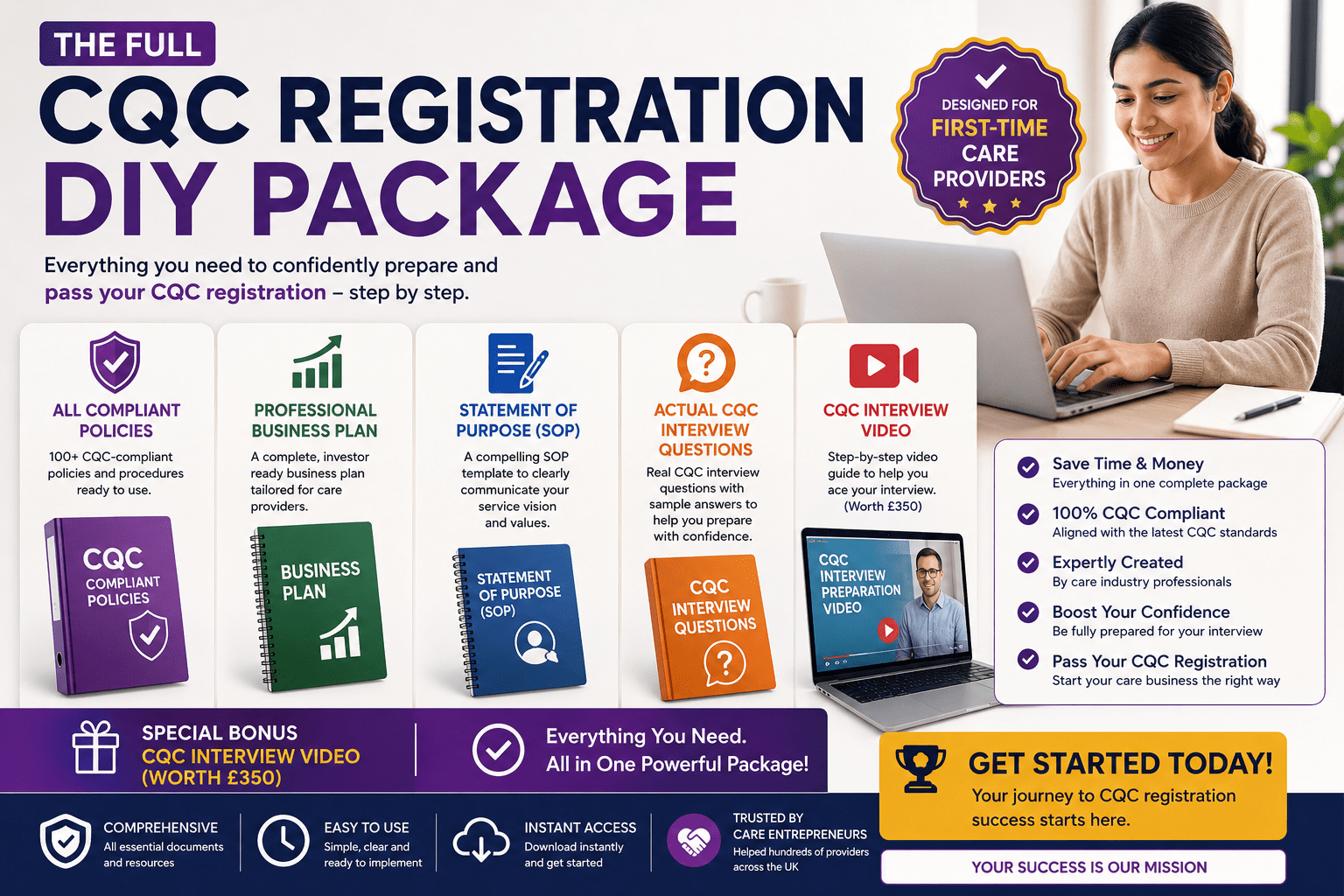
Promotional banner for CQC Registration DIY Package showing five feature cards and a woman using a laptop on a bright background.
CQC Registration Full Package – Call 07508823495 for details of this limited offer

Implementing Effective Safeguarding Policies

To protect your clients, safeguarding policies must be robust and well-implemented. Here’s how to create and enforce them effectively.

Creating a Home Care Safeguarding Policy

A solid safeguarding policy sets the foundation for safe practices. It should outline procedures for preventing harm, handling allegations, and responding to incidents. Make it accessible and ensure all staff understand their roles within it. A clear policy not only helps in meeting legal requirements but also in fostering a culture of safety.

Safer Recruitment and DBS Checks

Recruitment is your first line of defense against potential risks. Conduct thorough interviews and use DBS checks to verify applicants’ backgrounds. This process helps ensure you hire individuals who are committed to safeguarding principles. Proper recruitment practices protect your clients and uphold your agency’s reputation.

Whistleblowing and Incident Reporting

Encourage transparency through a clear whistleblowing policy. Staff should feel comfortable reporting concerns without fear of retaliation. Incident reporting mechanisms must be straightforward to facilitate quick responses. An open culture where concerns are addressed promptly is key to maintaining safety and trust in your service.

Training and Governance in Care Services

Effective training and governance enhance your agency’s capability to safeguard clients. Here’s how to implement them successfully.

Safeguarding Adults Training Essentials

Training equips your staff with the knowledge and skills to protect those in their care. Cover key areas like recognising abuse, reporting procedures, and legal obligations. Regular training ensures your team remains competent and confident in safeguarding duties.

Understanding the Mental Capacity Act 2005

The Mental Capacity Act 2005 is crucial for respecting clients’ autonomy. It guides decisions where capacity is in question, ensuring they are made in the client’s best interests. Understanding this act helps you support clients’ rights and make informed decisions on their behalf.

Quality Governance and PIR Safeguarding Evidence

Quality governance structures underpin effective safeguarding. Use audits and self-assessments to identify and address gaps. Document evidence of safeguarding practices for the CQC’s Provider Information Return. This not only aids compliance but demonstrates your commitment to continuous improvement and client safety.

Frequently Asked Questions

What are the safeguarding principles under the Care Act 2014?

The Care Act 2014 includes principles such as empowerment, prevention, proportionality, protection, partnership, and accountability. These principles guide your approach to safeguarding and ensure client safety.

How can I ensure safer recruitment in my care agency?

To ensure safer recruitment, conduct thorough interviews, verify references, and utilise DBS checks. These steps help you evaluate candidates’ suitability for safeguarding roles.

What should a whistleblowing policy include?

A whistleblowing policy should include clear reporting procedures, confidentiality assurances, and protection against retaliation. This encourages staff to report concerns without fear.

Why is safeguarding training important in care services?

Safeguarding training is crucial as it equips staff with the skills to recognise and respond to abuse. It ensures that all team members are prepared to uphold clients’ safety and rights.

How does the Mental Capacity Act 2005 relate to safeguarding?

The Mental Capacity Act 2005 ensures decisions are made in the best interests of clients who lack capacity, safeguarding their rights and dignity. Understanding this act is essential for compliance and quality care delivery.

Secure your growth spot now with limited-time expert consultancy offers before the mid-year deadline.

How to Win Your First Clients and Build Trust in a New Domiciliary Care Service

Starting a domiciliary care service is a challenge many underestimate, especially when it comes to winning those crucial first clients. Building trust with families and local authorities doesn’t happen by chance—it requires clear steps that show your commitment to quality and compliance from day one. In this guide, you’ll find practical advice on securing your first 10 to 20 clients while demonstrating strong governance aligned with CQC registration standards. Read on to learn how to establish a home care agency UK families can rely on.

Building Trust with CQC Registration

Building trust is crucial for any new service, and in the domiciliary care sector, it starts with CQC registration.

Understanding CQC Requirements

To operate legally as a care provider in the UK, you must meet specific CQC requirements. This process involves demonstrating your ability to deliver safe, effective, and compassionate care. You must prepare a range of documents, including your business plan and policies like safeguarding and infection control. Ensuring that you have enhanced DBS checks for your team and a CQC Statement of Purpose will set a strong foundation.

Preparing for the CQC Fit Person Interview

The CQC Fit Person interview is a key step in the registration process. It’s designed to assess your understanding of care standards and your ability to lead a compliant service. Practice is essential here. Mock interviews focusing on the Key Lines of Enquiry (KLOEs) can help you prepare for questions about safeguarding, leadership, and quality assurance.

Developing a CQC Statement of Purpose

Your CQC Statement of Purpose outlines your service’s vision and objectives. It should clearly state your care philosophy, the types of services you offer, and your commitment to meeting regulatory standards. This document is a vital part of your application, showcasing how your operations align with CQC expectations.

Winning First Care Clients

Securing your initial clients is critical to establishing a foothold in the domiciliary care market.

Marketing a Home Care Agency

Effective marketing is crucial for attracting clients. Start by building a strong online presence through social media and a professional website. Highlight what makes your service unique, such as specialised care or flexible service hours. Engaging storytelling and testimonials can also build trust and interest from potential clients.

Engaging Local Authority Brokerage

Local authorities play a significant role in client referrals. Building relationships with local authority brokers can boost your visibility and credibility. Attend networking events and workshops to connect with key figures. Demonstrate your commitment to quality care and compliance to earn their trust and recommendations.

Reaching Private Pay Clients

To attract private pay clients, focus on personalising your services. Tailor care plans to meet individual needs and preferences, offering transparency in pricing and services. Highlight your team’s qualifications and the care governance framework you have in place to assure clients of your service’s reliability.

Establishing a Strong Care Governance Framework

A robust governance framework ensures high standards of care and compliance, which is vital for gaining and retaining clients.

Creating Person-Centred Care Plans

Developing person-centred care plans involves tailoring services to meet each client’s unique needs. This approach not only improves client satisfaction but also demonstrates your commitment to quality care. Regularly review and update these plans to ensure they remain relevant and effective.

Ensuring DBS-Checked Carers

All carers should have up-to-date DBS checks to ensure the safety of your clients. Maintaining accurate records of these checks and renewing them as required is crucial. This practice not only complies with regulations but also builds trust with clients and their families.

Implementing Quality Assurance in Domiciliary Care

Quality assurance mechanisms are essential for maintaining high standards of care. Implement regular audits and feedback loops to identify areas for improvement. Encourage open communication with clients and their families to ensure their needs are met and concerns addressed promptly.

Frequently Asked Questions

What is the CQC Fit Person interview?

The CQC Fit Person interview assesses the suitability of individuals to manage a care service. It evaluates understanding of care standards and leadership capabilities.

How can I attract my first care clients?

Focus on building a strong online presence, engage in local networking, and personalise services to meet client needs. Highlight your commitment to quality and compliance.

Why is a CQC Statement of Purpose important?

A CQC Statement of Purpose outlines your service’s aims, objectives, and commitment to regulatory standards. It is a vital part of demonstrating your suitability as a care provider.

What are person-centred care plans?

Person-centred care plans are tailored to meet the individual needs and preferences of each client, ensuring personalised and effective care.

Why is quality assurance important in domiciliary care?

Quality assurance ensures high standards of care are consistently met. It involves regular audits and feedback loops to identify and address areas for improvement.

Secure your growth spot now with limited-time expert consultancy offers before the mid-year deadline.

Why the CQC Keeps Rejecting Your Home Care Application — and How to Put It Right

CQC registration often feels like a maze with no clear exit, especially when your home care application keeps hitting roadblocks. Each rejection chips away at your confidence, leaving you unsure which part of your submission needs fixing. This guide breaks down the most common reasons for a home care application rejected by the CQC and offers clear, practical steps to strengthen your case and move forward with confidence. Download our CQC Registration Readiness Checklist, then book a complimentary discovery call to arrange a focused Application Readiness Review or a Fit Person Mock Interview. If a colleague is preparing to register, share this guide and invite them to speak with us today. For further insight, visit this Facebook discussion.

Common Reasons for Rejection

Understanding why your CQC registration might be rejected is critical to improving your application. Let’s explore three main pitfalls and how you can avoid them.

Weak or Unclear Statement of Purpose

A strong Statement of Purpose is your foundation. It clearly outlines your service aims, objectives, and what sets you apart. If this lacks clarity, your application is at risk. Ensure it includes details about the types of care you provide, the needs you meet, and your goals for future growth.

Your Statement of Purpose should not be just a formality. It needs to reflect your commitment to high-quality care and compliance with CQC standards. Make it specific: what unique value do you offer? If you’re adding services like Treatment of Disease, Disorder, and Injury (TDDI), explain why. Focus on how you address the CQC’s five key questions, especially “well-led” and “responsive.” This document is your chance to make a compelling case for your service.

Governance and Leadership Gaps

Strong leadership is essential for a successful CQC registration. Applications often fail because they lack evidence of robust governance. This includes clear decision-making structures and accountability processes. If your team’s roles and responsibilities are not well-defined, your application may be rejected.

Consider how your leadership team demonstrates expertise in safeguarding, risk management, and delivering a responsive service. Evidence of regular audits and quality assurance measures can strengthen your case. Showcase your Registered Manager’s qualifications and experience. If gaps exist, seek training or consult with experts to bolster your leadership framework.

Inadequate Policies and Procedures

Policies and procedures are the backbone of your operation. Inadequacies here can lead to rejection. CQC looks for comprehensive documents that cover key areas like safeguarding, medicines management, and complaints handling. Each policy should be tailored to your service’s unique context.

Update your policies regularly and ensure they’re in line with current legislation. They should reflect best practices and be easy for staff to understand and follow. For example, your safeguarding policy must protect vulnerable clients effectively. Invest time in refining these documents to avoid common pitfalls and demonstrate compliance.

Strengthening Your Resubmission

Once you identify the weak points in your initial application, it’s time to revamp and resubmit with a stronger case.

Evidence for Registered Manager Requirements

The role of the Registered Manager is pivotal. CQC needs assurance that your manager has the necessary skills and qualifications. This includes not just academic credentials but also practical experience in managing care services. Gather evidence that demonstrates your manager’s capacity to lead effectively.

Include testimonials, professional development records, and examples of past leadership successes. If your manager lacks certain skills, consider further training. Resources like mock interviews can also be beneficial. This preparation shows your commitment to maintaining high standards.

Addressing Safeguarding and Safer Recruitment

Safeguarding is non-negotiable in care services. You must show robust systems for protecting clients and recruiting staff safely. This means thorough DBS checks, reference checks, and ongoing staff training. Your recruitment process should prioritise safety and compliance.

Implement rigorous safeguarding policies and ensure all staff understand their importance. Regularly update training programs to cover new risks and best practices. Demonstrating a proactive approach to safeguarding can significantly enhance your application.

Enhancing Training and Competencies

Staff training is crucial for ensuring high-quality care. CQC requires evidence that your team is well-trained and competent. Develop a comprehensive training program that covers essential topics like the Mental Capacity Act, data protection, and client-centred care.

Track training sessions, certifications, and competencies. Regular supervision and appraisals can help identify areas for improvement. By investing in your staff’s development, you not only improve your service but also strengthen your application.

Practical Steps for Success

To navigate the CQC registration process effectively, follow these practical steps to enhance your application.

Conducting a Location Assessment

Your service’s location must meet CQC’s safety and suitability standards. Conduct a thorough assessment to identify any potential issues. This includes evaluating accessibility, safety, and suitability for providing care services.

Address any deficiencies with clear action plans and timelines. If you’re expanding or relocating, ensure your new site complies with regulatory requirements. A well-prepared location assessment can demonstrate your commitment to providing a safe environment.

Ensuring Financial Viability and Business Planning

A sound business plan is vital for demonstrating financial viability. CQC wants assurance that your service can sustain operations and meet financial commitments. Your business plan should include detailed financial projections, funding sources, and contingency plans.

Highlight your strategies for managing budgets, handling unexpected costs, and ensuring service continuity. A robust business plan not only supports your application but also guides your service’s long-term success.

Preparing for the CQC Fit Person Interview

The CQC Fit Person Interview is a critical component of the registration process. This interview assesses the suitability of your Registered Manager or nominated individual. Preparation is key: understand the questions that might be asked and rehearse your answers.

Focus on demonstrating your understanding of the CQC’s five key questions: safe, effective, caring, responsive, and well-led. Use real-life examples to illustrate your points. Mock interviews can be invaluable in building confidence and ensuring you’re well-prepared.

Frequently Asked Questions

What are the key components of a strong Statement of Purpose?

A strong Statement of Purpose clearly outlines your service aims, objectives, and the unique value you offer. It should cover the types of care provided, the needs addressed, and align with the CQC’s five key questions.

How can I demonstrate effective governance and leadership?

Show evidence of clear decision-making structures, accountability processes, and regular audits. Highlight your leadership team’s qualifications and experience in managing care services effectively.

What should comprehensive policies and procedures include?

Your policies should cover key areas like safeguarding, medicines management, and complaints handling. Ensure they’re up-to-date, reflect best practices, and are easy for staff to understand and follow.

Secure your growth spot now with limited-time expert consultancy offers before the mid-year deadline.