Tag: Domiciliary Care Registration

Why well‑written policies are failing CQC registration—and how to fix the gaps

Why well‑written policies are failing CQC registration—and how to fix the gaps

Well-written CQC policies alone no longer secure registration as they once did. Care providers face common gaps around governance, evidence of implementation, training, audits, and involving service users. Understanding these missing pieces is key to meeting CQC’s expectations and preparing for fit person interviews. Read on to learn where your policies might fall short—and how Hellocare Consulting can help you build robust evidence and readiness for a successful CQC registration. https://www.linkedin.com/posts/hellocare-consulting-limited_cqcregistration-homecareagency-cqcinterview-activity-7415336059175366656-z776

Understanding CQC Registration Challenges

Navigating CQC registration can be daunting, particularly when policies alone are not enough. Let’s explore why some policies fail and pinpoint common governance gaps.

Why Policies Alone Fail

Many believe having well-drafted policies guarantees CQC registration. While policies are crucial, they aren’t the full picture. A lack of practical application and evidence can lead to failure. Inspectors look for how these policies are ingrained in daily operations, not just written words.

To succeed, you need more than just documents. You must demonstrate that your team understands and implements these procedures effectively. Without evidence of real-world application, even the best-written policies can fall short. This is where many care providers struggle, leading to unsuccessful applications.

Common Gaps in Governance

Effective governance is the backbone of any care service. Yet, this is often an area where many fall short. Strong governance ensures accountability, quality assurance, and continuous improvement. Without clear governance structures, policies might not be enforced consistently.

Problems often arise when roles and responsibilities are not clearly defined. This creates confusion and mismanagement. Regular audits and feedback loops are essential to maintain standards and improve services. Without them, achieving compliance becomes an uphill task. Address these gaps to ensure your service operates safely and effectively.

Bridging the Policy Gaps

Having identified these challenges, it’s crucial to bridge the gaps. Implementing policies effectively and ensuring staff competency is key to successful CQC registration.

Evidence of Implementation CQC

The evidence of implementation is a cornerstone of compliance. It shows that policies are not just on paper but active in your organisation. Documented evidence like audit records and staff training logs can greatly support your case.

It’s important to regularly review these documents to ensure they reflect current practices. Inspectors look for proof that policies are not only understood but are also part of your daily routine. Without this, even the most comprehensive policies can appear hollow. Make sure your records are detailed and up-to-date to meet CQC expectations.

Importance of Training and Competency

Training is essential for staff to deliver quality care consistently. A well-maintained training matrix ensures all team members are competent in their roles. Regular competency assessments help identify areas needing improvement.

But training should be ongoing. Simply ticking a box isn’t enough; staff should be encouraged to develop and refine their skills continuously. This not only boosts compliance but also improves the overall quality of care provided. Remember, a well-trained team is your best asset in maintaining high standards.

Partnering with Hellocare Consulting

Navigating these complexities can be challenging. Partnering with experts can make a significant difference. Hellocare Consulting offers tailored solutions to prepare you effectively.

Preparing for Fit Person Interviews

Fit person interviews are critical. They assess not just your knowledge but also your ability to manage a care service. Preparation is key. Mock interviews and coaching can help you approach these sessions with confidence.

Knowing what to expect and how to articulate your vision for the service can set you apart. Often, the focus is on demonstrating leadership and understanding of regulatory requirements. Practice with real-world scenarios to improve your readiness. This preparation can be the difference between success and failure.

Tailored CQC Readiness Plan

Every care provider is unique, and so are their challenges. A tailored CQC readiness plan can address specific gaps in your service. This plan offers a strategic roadmap to achieve compliance.

With expert guidance, you can ensure your service meets all CQC standards. From document preparation to interview coaching, a comprehensive plan covers all bases. This proactive approach not only aids in registration but sets a strong foundation for future success. Investing in tailored support can streamline your path to compliance and quality care.


Common CQC Registration Mistakes—and How to Fix Them Fast

Common CQC Registration Mistakes—and How to Fix Them Fast

DIY compliance may seem like a straightforward path when preparing your CQC registration, but it often leads to costly delays and refusals. Many care providers underestimate the complexity of CQC policies and procedures, which can cause critical errors in applications and interviews. In this post, you’ll learn the common reasons behind CQC rejection and practical steps to strengthen your submission, giving you a clearer route to approval. https://www.linkedin.com/posts/hellocare-consulting-limited_cqcregistration-homecareagency-activity-7412443242773991426-O1IR

Common DIY Compliance Pitfalls

Understanding the roadblocks in CQC registration mistakes is the first step to overcoming them. Many providers stumble at crucial points, leading to delays or rejections.

Misunderstanding CQC Requirements

Failing to grasp the full breadth of CQC requirements can derail your application. At its core, CQC registration ensures that providers deliver safe and high-quality care. But did you know that each type of service has specific standards? For instance, domiciliary care registration demands different criteria compared to supported living services. This is where many falter, thinking a one-size-fits-all approach will work. Ensure you know exactly what’s required for your specific service type.

Inadequate CQC Policies and Procedures

Your policies and procedures are not just paperwork—they reflect your service’s quality. Many submissions fall short because they rely on generic templates. The CQC looks for detailed, tailored policies that address the unique aspects of your service. If your procedures don’t align with your service’s operations, you risk rejection. Instead, focus on developing comprehensive documents that accurately represent your service.

Overlooking CQC Interview Preparation

The interview is a pivotal moment in the CQC registration process. Yet, many underestimate its importance. It’s not just about answering questions; it’s about demonstrating your understanding and readiness to deliver care. Failing to prepare thoroughly can result in unexpected questions stumping you. Anticipate potential topics by reviewing common CQC interview questions and practice with mock sessions.

Strengthening Your CQC Registration Application

Now that we’ve highlighted common pitfalls, let’s explore how you can bolster your CQC application. A proactive approach will set you on the path to success.

Tailored Policies and Procedures

Crafting bespoke policies is crucial. Start by evaluating your service’s unique characteristics, then develop policies that address specific operational scenarios. This not only shows your commitment to quality but also ensures compliance with CQC standards. Remember, the aim is to reflect real-life practices, not just theoretical guidelines. Tailoring these documents will strengthen your application and provide clarity during inspections.

Effective CQC Interview Preparation

Preparing for the CQC interview requires focus and strategy. Begin by understanding the key areas the interview will cover, such as safeguarding and leadership. Practice responding to questions in these areas to build confidence. Engaging in a mock CQC fit person interview can be particularly beneficial. It allows you to identify weak spots and improve your responses, ensuring you present yourself as a competent and knowledgeable provider.

Comprehensive PIR Support

Completing the Provider Information Return (PIR) can be daunting, but it’s a vital component of your application. A thorough PIR showcases your service’s strengths and readiness. Start by gathering all necessary data about your operations and performance. By providing detailed and accurate information, you reduce the risk of surprise inspections and demonstrate transparency. Don’t hesitate to seek PIR support if you need guidance on effectively completing this document.

Partnering with a CQC Consultant for a successful CQC Registration

While DIY efforts can take you part of the way, partnering with a consultant can provide the expertise and assurance needed to succeed. Here’s why professional guidance can be invaluable.

Benefits of Professional Guidance

Engaging a CQC consultant brings expert insight into the complex registration process. With a proven track record, consultants offer tailored advice to navigate common challenges. Their experience means they can anticipate potential hurdles and provide solutions. This professional support ensures your application is robust, reducing the likelihood of rejection and streamlining the path to approval.

Custom Packages for Service Expansion

If you’re considering expanding your services, a consultant can be a game-changer. They offer custom packages that cater to your specific needs, whether you’re adding children to your scope or introducing a new regulated activity like TDDI. This bespoke approach helps you manage the intricacies of service expansion while maintaining compliance with CQC standards.

Preparing for TDDI and Children’s Services

Expanding into areas like TDDI and children’s services involves additional regulations and considerations. Consultants can guide you through these complexities, ensuring your service meets all necessary standards. They provide insights into best practices and help you develop strategies for successful implementation. With the right preparation, you can confidently broaden your service offerings and enhance the quality of care you provide.

In conclusion, navigating the CQC registration process requires a blend of understanding, preparation, and expert guidance. By addressing common pitfalls and focusing on tailored solutions, you enhance your chances of success. Remember, while DIY efforts are commendable, partnering with experts can provide the assurance and support needed to achieve compliance and grow your services effectively.

Navigating the New Challenges: Registering a Domiciliary Care Service Post-CQC July Updates

Navigating the New Challenges: Registering a Domiciliary Care Service Post-CQC July Updates

Registering a domiciliary care service has become noticeably more complex since the CQC July 2023 updates. If you’re planning care service expansion, these new requirements could slow your progress and raise unexpected challenges. Understanding how the latest CQC compliance rules affect domiciliary care registration is essential to navigate this changing environment confidently. Contact Hellocare Consulting today to ensure your service meets the current standards and achieves successful registration. For more information, visit this link.

Understanding CQC July 2023 Updates

Navigating the changes brought by the CQC July 2023 updates can feel challenging, but understanding these changes is crucial for successful registration.

Key Changes to Registration Processes

The CQC July 2023 updates introduced new criteria for registering domiciliary care services. These changes emphasise the importance of demonstrating compliance with updated safety and care standards. You now need to ensure all documentation, such as policies and procedures, are not only complete but also aligned with these revised standards. The introduction of more detailed background checks means that your application must reflect a comprehensive understanding of these new requirements.

Moreover, applicants are now required to submit a more thorough business plan. This plan needs to highlight your service model, market strategy, and financial viability. The CQC now places significant emphasis on demonstrating how your service will maintain high standards of care. This means your business plan should be clear and detailed to meet their expectations. You may find it beneficial to seek expert advice to navigate these complexities, ensuring all elements of your application are robust and aligned with the new criteria.

Impact on Domiciliary Care Services

These updates have significant implications for domiciliary care registration. The increased scrutiny in the application process might initially seem daunting. Yet, it’s an opportunity to refine your service offerings and ensure they meet the highest standards. Existing services must review their current policies to ensure they meet these new requirements. This may involve updating staff training, care protocols, and safety measures.

For new providers, this means a more rigorous preparation phase. You’ll need to demonstrate not just an understanding of the standards but also a clear plan for delivering these services consistently. This could involve investing more time and resources into developing your business plan and ensuring compliance across all areas of your service. Ultimately, these updates aim to enhance the quality of care provided, which in the long run, benefits both providers and service users.

Navigating CQC Compliance Challenges

Understanding these updates is one thing; navigating the compliance challenges they present is another. Here’s how you can successfully tackle these obstacles.

Strategies for Successful Registration

Firstly, focus on building a strong foundation. Start by gathering all necessary documents and ensure they are accurate. This includes a detailed business plan, proof of financial stability, and comprehensive policies and procedures. Your CQC compliance strategy should also incorporate regular staff training. This will ensure your team is well-prepared to meet updated care standards. Consider engaging with a consultancy service, like Hellocare Consulting, that specialises in CQC registration to guide you through this process.

Using real-life examples can also be a powerful strategy. Demonstrating how your service has successfully handled previous compliance challenges can add credibility to your application. Additionally, attending workshops or seminars on recent CQC updates can provide valuable insights and prepare you for any questions during the registration process.

Common Pitfalls and How to Avoid Them

One common issue is incomplete documentation. Many applicants overlook the importance of thorough documentation, which can lead to delays or even rejections. Ensure every document is completed in detail and double-check for accuracy. Another challenge is underestimating the significance of a comprehensive business plan. Without a clear outline of how your service will operate and comply with CQC standards, your application may fall short.

To avoid these pitfalls, it’s crucial to stay informed about the latest updates and requirements. Regularly reviewing resources such as the CQC website can provide up-to-date information. Implementing a review process before submission can also help catch any errors or omissions. By maintaining a proactive approach, you can minimise the risk of encountering these common issues.

Expanding Your Care Service

Once you’ve tackled registration, the next step is expanding your services. This section will help you plan for future growth while maintaining compliance.

Planning for Care Service Expansion

Planning for care service expansion involves more than just increasing your client base. It requires strategic planning to ensure your services remain compliant with CQC standards. Begin by assessing the current needs within your community. This will help identify potential areas for expansion, such as introducing new services or catering to different client groups. Developing a detailed plan that outlines these goals can guide your expansion efforts.

Consider how expanding your services might require additional resources, such as hiring more staff or investing in new technologies. It’s essential to balance growth with maintaining quality care. You might also look into collaborations with existing services to expand your reach and capabilities. This can provide access to new markets while sharing the burden of compliance and operational costs.

Benefits of Professional Consultancy

Engaging with professional consultancy services can offer significant advantages when expanding your care service. They bring expertise in navigating CQC regulations and can provide tailored advice to support your growth ambitions. A consultant can help streamline your expansion process by ensuring all aspects of your service meet regulatory requirements. This reduces the risk of non-compliance and enhances your service quality.

Moreover, consultants can offer insights into market trends and client needs, helping you identify opportunities for expansion. This guidance not only supports your immediate goals but also helps build a sustainable growth strategy for the future. By seeking expert advice, you can confidently expand your services while ensuring compliance with CQC standards.

In summary, understanding and adapting to the CQC July 2023 updates is crucial for successful domiciliary care registration and future service expansion. By preparing thoroughly and seeking expert guidance, you can navigate these challenges effectively.

Share our CQC Registration Posts. Get £100 Per Sign-Up! Join the Hellocare Referral Program Today!

Domiciliary Care Registration

A Hellocare Consulting Guide to Domiciliary Care Registration

Domiciliary care registration is a rewarding yet challenging process. Care registration is essential for ensuring compliance with the Care Quality Commission (CQC) and delivering high-quality care services. At Hellocare Consulting, we specialize in guiding care providers through every stage of the registration process, making it seamless and efficient.

What Is Domiciliary Care Registration?

CQC registration is the process of obtaining approval from the CQC to operate a home care agency legally. The CQC regulates domiciliary care providers to ensure they meet the required standards of safety, effectiveness, compassion, and leadership. Without this registration, it is illegal to provide regulated home care services in the UK.

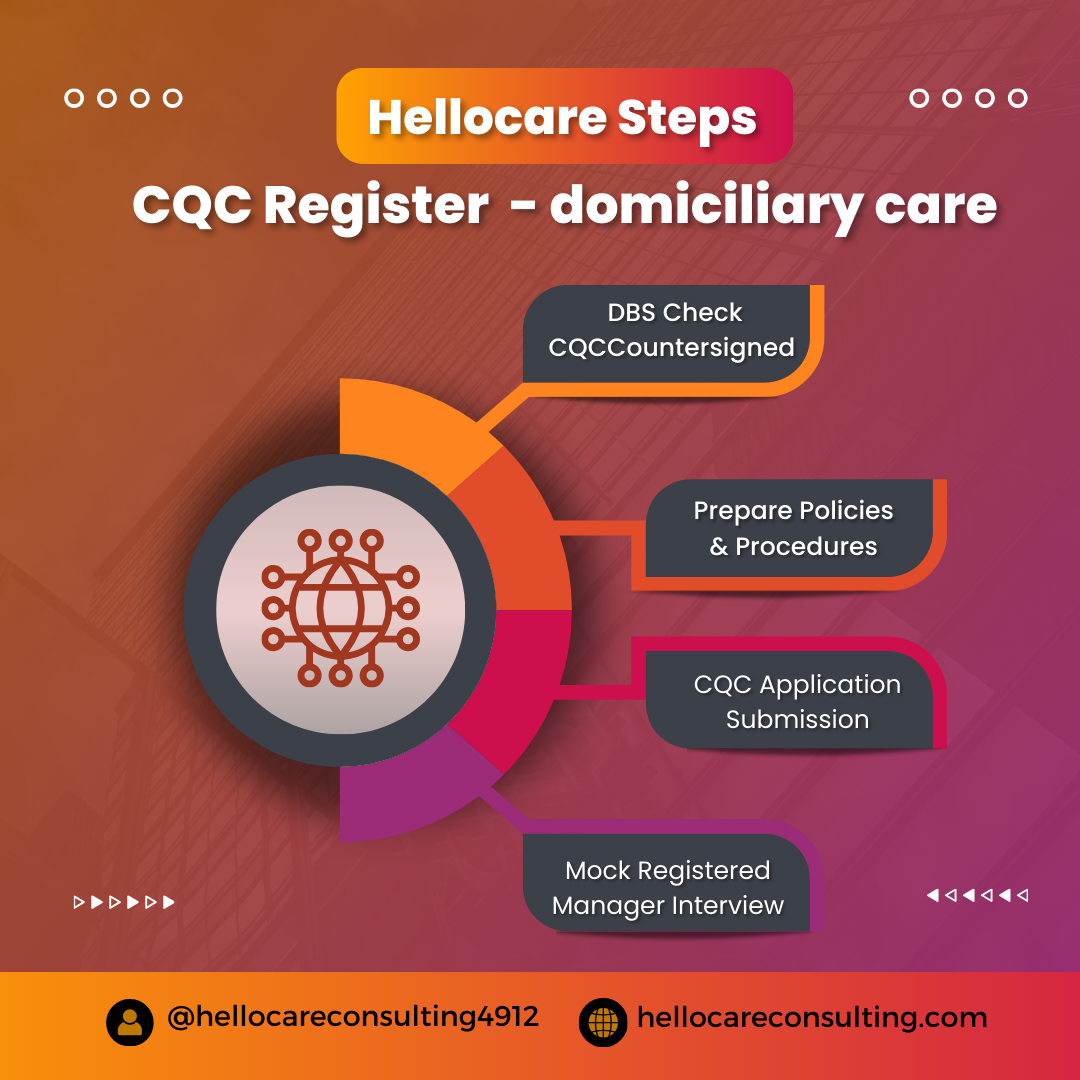
Steps to Achieve Domiciliary Care Registration

1. Understand CQC Requirements

To complete CQC care registration, providers must comply with the Health and Social Care Act 2008 and meet the CQC’s five Key Lines of Enquiry (KLOEs):

  • Safe – Ensuring domiciliary care clients are protected from harm.

  • Effective – Delivering high-quality care that meets health and well-being needs.

  • Caring – Providing compassionate and person-centered care.

  • Responsive – Adapting services to meet individual needs.

  • Well-led – Demonstrating strong leadership and governance.

Hellocare Consulting provides in-depth training and resources to help care providers understand and implement these requirements. Learn more about our compliance services here.

2. Prepare Key Policies and Procedures

A successful CQC application requires robust policies and procedures, including:

  • Safeguarding and risk management

  • Medication administration

  • Staff recruitment and training

  • Complaints and feedback handling

Hellocare Consulting offers pre-approved templates and expert guidance to help providers develop comprehensive documentation. Explore our policy development services here.

3. Appoint a Registered Manager

Every care provider must appoint a Registered Manager who is responsible for ensuring regulatory compliance. The individual must have relevant experience, qualifications, and a strong understanding of CQC standards.

4. Submit the CQC Domiciliary Care Registration Application

Once all requirements are met, the next step is to submit the domiciliary care registration application via the manual process. This includes:

  • Statement of Purpose

  • Fit and Proper Persons Declaration

  • DBS checks and references for key personnel

  • Business and financial plans

5. Prepare for the CQC Interview and Inspection

CQC conducts an interview and, in some cases, a site inspection to verify compliance. Applicants should be prepared to demonstrate their knowledge of care regulations, leadership skills, and operational procedures.

How Hellocare Consulting Can Help

Navigating domiciliary care registration can be overwhelming. Hellocare Consulting simplifies the process by offering:

  • One-on-One Consultancy – Personalized support tailored to your business needs.

  • Mock CQC Interviews – Practice sessions to build confidence for your assessment.

  • Full Application Assistance – Expert guidance to ensure accurate and complete submissions.

With our professional support, domiciliary care registration becomes a streamlined and stress-free experience.

Additional Resources

For more information about domiciliary care registration and regulatory requirements, check out these helpful resources:

Conclusion

Achieving domiciliary care registration is a critical step for launching a successful home care business. With the right preparation and expert guidance from Hellocare Consulting, you can confidently navigate the process and establish a compliant, high-quality care service.

Are you ready to begin your domiciliary care registration journey? Contact Hellocare Consulting today to get expert support and start your application with confidence.

Domiciliary Care Registration