• info@hellocareconsulting.com
  • Book Free Consultation

Month: April 2026

Woman seated at an outdoor wooden table with a laptop, notebook, and colorful sticky notes, looking at the camera.

CQC Registration Made Clear: A Practical Guide for New and Growing Care Providers

CQC Registration Made Clear: A Practical Guide for New and Growing Care Providers

CQC registration can feel overwhelming when you’re starting or expanding a care service. You need to understand the essential steps, from preparing your fit person interview and Provider Information Return to adding regulated activities like Treatment of Disease, Disorder or Injury (TDDI) or children’s services. This guide breaks down the process clearly and shows how Hellocare Consulting supports you every step of the way to build a strong, compliant foundation for your care agency. Explore the latest guidance here.

Essential Steps for CQC Registration

Embarking on your CQC registration journey involves navigating several key steps. Understanding the basics and preparing effectively can make a significant difference.

Understanding Regulated Activities

When it comes to CQC registration, knowing your regulated activities is crucial. These activities determine what services your agency can provide. Examples include personal care and nursing treatment. Each activity has its own standards and requirements set by the Care Quality Commission. You must demonstrate your capability to deliver these services safely and effectively.

Understanding these activities helps you align your agency’s services with CQC standards. This alignment is pivotal in ensuring that you meet regulatory expectations. To dive deeper into these standards, check out the regulations.

Preparing CQC Policies and Procedures

Policies and procedures form the backbone of your CQC registration. These documents cover everything from staff conduct to emergency protocols. They ensure everyone in your agency understands their roles and responsibilities.

Comprehensive policies help in maintaining high-quality service and compliance. Regularly updating these documents is necessary to reflect any regulatory changes. A well-documented procedure can also enhance your team’s efficiency, leading to better care outcomes.

Navigating the Fit Person Interview

The Fit Person Interview is a pivotal part of the CQC registration. It assesses your ability to manage and deliver care services effectively. Preparation is key to succeeding in this interview. Familiarize yourself with potential questions and focus on demonstrating your understanding of CQC standards.

Practicing your responses and highlighting your agency’s strengths can ease the interview process. Consider mock interviews to boost your confidence. Explore tips for interview preparation to ensure success.

Expanding Care Services Safely

Once you have a firm foundation, expanding your services can open new opportunities. This section explores how to add new services while maintaining compliance.

Adding Treatment of Disease, Disorder or Injury (TDDI)

Introducing TDDI services can significantly broaden your agency’s capabilities. However, it requires careful planning and compliance. Meeting the specific standards for TDDI ensures you provide safe and effective care.

By offering TDDI, you position your agency to serve a wider client base with diverse needs. This expansion not only enhances service delivery but also increases potential referrals. Learn about the regulation changes affecting TDDI services.

Integrating Children’s Services CQC

Adding children’s services involves understanding specific CQC requirements for this demographic. This service expansion allows your agency to cater to younger clients, meeting their unique care needs.

Ensure your application addresses safeguarding requirements and staff training standards. Proper planning and compliance can open doors to new contracts with local authorities. Explore guidelines for integrating children’s services.

Clinical Governance in Home Care

Good clinical governance is vital for maintaining high standards in home care services. Implementing effective governance structures helps you monitor and improve care quality.

Regular audits, staff training, and feedback loops are critical components. These strategies ensure your services remain responsive to client needs and compliant with CQC standards. Review the latest regulatory updates for home care governance.

Overcoming Common Registration Challenges

Even with thorough preparation, challenges in the registration process can arise. Here’s how to tackle common obstacles effectively.

Crafting a Provider Information Return (PIR)

The Provider Information Return (PIR) is a detailed document that outlines your service’s readiness and quality. Completing this document thoroughly is crucial.

The PIR highlights your agency’s commitment to quality care and compliance. It should reflect accurate data and insights into your service delivery and outcomes. An incomplete PIR can lead to delays or negative inspection outcomes. Get support with crafting your PIR.

Common Pitfalls in CQC Compliance

Misunderstanding CQC standards or neglecting certain requirements can lead to compliance issues. Regular training and updates on CQC regulations can prevent these pitfalls.

Most agencies struggle with maintaining documentation and adhering to updated policies. Staying informed and proactive can keep your agency on track. Remember, compliance is an ongoing process, not a one-time task.

CQC Consultancy UK Support

Navigating CQC registration can be complex, but you don’t have to do it alone. Hellocare Consulting offers expert guidance and support tailored to your agency’s needs.

Our consultancy services cover everything from interview preparation to policy development. With our support, you can confidently expand your services and maintain compliance. Embrace the opportunity to enhance your care offerings and grow your agency with tailored consultancy.

In summary, CQC registration requires careful planning and ongoing commitment. By understanding the requirements and leveraging expert support, you can successfully navigate the process and expand your services safely.

Avoid penalties and missed growth by acting promptly with Hellocare’s expert support for your care agency.

Top-down view of eight professionals in suits around a wooden conference table, reviewing charts and documents.

How to Choose the Right Consultancy for CQC Registration and Service Diversification

How to Choose the Right Consultancy for CQC Registration and Service Diversification

Choosing the right CQC registration consultancy can shape the future of your care service. With the growing demand to add regulated activities like Treatment of Disease, Disorder and Injury (TDDI) or expand children’s services, selecting a partner who understands these complexities is essential. In this guide, you’ll learn which factors matter most when seeking CQC application support and how Hellocare Consulting can help you navigate each step with confidence. Read more about crafting a robust business plan for successful CQC registration.

Choosing the Right Consultancy

Selecting a consultancy for your care service is a pivotal decision. The right partner can provide the expertise and support needed to meet regulatory requirements and expand your offerings. Here’s what to consider:

Evaluating Sector Expertise

When considering a consultancy, sector knowledge is crucial. A consultancy with deep insights into the care sector can offer you tailored advice that aligns with regulatory demands. Ask about their experience with similar organisations. This experience ensures they understand the nuances of care regulations.

Look for consultancies with a proven track record in CQC registration. Their past successes can provide reassurance, showing they know how to navigate the complexities of the process. Remember, the right sector expertise can make the difference between a smooth registration and costly delays.

Importance of Proven Outcomes

You need a consultancy that delivers results. Ask about their success rates and request references from past clients. A high success rate in CQC registration applications, like the 99.9% achieved by some, indicates reliability and competence.

Proven outcomes mean they have established systems and processes to support your needs. This reliability is essential when dealing with the complexities of care regulation. Don’t settle for anything less than a consultancy that can demonstrate consistent, positive results.

Policy Development and Compliance

Effective policy development is vital for compliance. Your consultancy should offer guidance on creating robust policies that meet CQC standards. These policies are crucial for maintaining high-quality care and ensuring staff understand their roles.

Ask how the consultancy supports policy development. Do they offer templates or personalised support? Look for a partner who provides comprehensive, compliance-focused solutions, ensuring your policies are always up to date.

Essential Support Services

Once you’ve chosen your consultancy, understanding the support services they offer is key. These services facilitate your path to compliance and service expansion.

CQC Application Support

Navigating the CQC application can be daunting. A reliable consultancy offers end-to-end support, ensuring your application is accurate and comprehensive. They provide guidance on every aspect, from initial preparation to submission.

Ask about their process for handling applications. Do they offer a detailed checklist or personalised consultations? Effective support can streamline your application, reducing the risk of delays or rejections.

Fit Person Interview Preparation

Preparing for the Fit Person interview is critical. The consultancy should offer mock interviews, providing you with the confidence to handle CQC questions effectively. This preparation covers key topics like safe and responsive care.

A partner experienced in interview preparation can offer insights into what the CQC expects. They provide not just practice questions but also strategies to showcase your readiness and commitment to quality care.

PIR Guidance and Submission

Provider Information Return (PIR) submissions are essential for maintaining compliance. Your consultancy should assist in completing and submitting this documentation, ensuring accuracy and timeliness.

Ask how they support PIR submissions. Do they offer ongoing assistance or just initial guidance? Ongoing support ensures your submissions remain compliant and reflect the quality of your service.

Expanding Care Services

As you consider expanding your care services, the right guidance can open new opportunities. Whether adding regulated activities or diversifying your offerings, careful planning is key.

Adding TDDI to Your Offerings

Incorporating Treatment of Disease, Disorder and Injury (TDDI) into your services can broaden your client base. A consultancy experienced in this area can help you add TDDI to your offerings, ensuring compliance with all regulations.

They should provide insights into the benefits of TDDI, like attracting new referrals and increasing service scope. With the right support, you can confidently expand your services to meet growing client needs.

Expanding Children’s Services

Adding children’s services requires careful planning and compliance adherence. A consultancy with experience in this area can guide you through the process, ensuring all regulatory requirements are met.

They provide support in areas like safeguarding and staffing, ensuring your expanded services are safe and effective. With expert guidance, you can open new opportunities with local authorities and specialist contracts.

Learning Disability and Autism Expansion

Expanding services to include support for learning disabilities and autism can meet significant community needs. Consultancies with expertise in this area provide crucial support, from compliance to staff training.

They offer insights into developing specialised care plans, ensuring your service meets all client needs. With their support, you can confidently expand your offerings, providing essential services to those who need them most.

Choosing the right consultancy involves evaluating their expertise, proven outcomes, and support services. By partnering with experts, you ensure your care service is well-prepared to meet regulatory demands and expand successfully.

See how Hellocare’s tailored support can simplify your care agency’s CQC journey and service expansion.

Eight professionals around a wooden conference table, reviewing charts and documents from a top-down view, during a meeting.

How to Choose the Right Consultancy for CQC Registration and Service Diversification

How to Choose the Right Consultancy for CQC Registration and Service Diversification

Choosing the right CQC registration consultancy can shape the future of your care service. With the growing demand to add regulated activities like Treatment of Disease, Disorder and Injury (TDDI) or expand children’s services, selecting a partner who understands these complexities is essential. In this guide, you’ll learn which factors matter most when seeking CQC application support and how Hellocare Consulting can help you navigate each step with confidence. Read more about crafting a robust business plan for successful CQC registration.

Choosing the Right Consultancy

Selecting a consultancy for your care service is a pivotal decision. The right partner can provide the expertise and support needed to meet regulatory requirements and expand your offerings. Here’s what to consider:

Evaluating Sector Expertise

When considering a consultancy, sector knowledge is crucial. A consultancy with deep insights into the care sector can offer you tailored advice that aligns with regulatory demands. Ask about their experience with similar organisations. This experience ensures they understand the nuances of care regulations.

Look for consultancies with a proven track record in CQC registration. Their past successes can provide reassurance, showing they know how to navigate the complexities of the process. Remember, the right sector expertise can make the difference between a smooth registration and costly delays.

Importance of Proven Outcomes

You need a consultancy that delivers results. Ask about their success rates and request references from past clients. A high success rate in CQC registration applications, like the 99.9% achieved by some, indicates reliability and competence.

Proven outcomes mean they have established systems and processes to support your needs. This reliability is essential when dealing with the complexities of care regulation. Don’t settle for anything less than a consultancy that can demonstrate consistent, positive results.

Policy Development and Compliance

Effective policy development is vital for compliance. Your consultancy should offer guidance on creating robust policies that meet CQC standards. These policies are crucial for maintaining high-quality care and ensuring staff understand their roles.

Ask how the consultancy supports policy development. Do they offer templates or personalised support? Look for a partner who provides comprehensive, compliance-focused solutions, ensuring your policies are always up to date.

Essential Support Services

Once you’ve chosen your consultancy, understanding the support services they offer is key. These services facilitate your path to compliance and service expansion.

CQC Application Support

Navigating the CQC application can be daunting. A reliable consultancy offers end-to-end support, ensuring your application is accurate and comprehensive. They provide guidance on every aspect, from initial preparation to submission.

Ask about their process for handling applications. Do they offer a detailed checklist or personalised consultations? Effective support can streamline your application, reducing the risk of delays or rejections.

Fit Person Interview Preparation

Preparing for the Fit Person interview is critical. The consultancy should offer mock interviews, providing you with the confidence to handle CQC questions effectively. This preparation covers key topics like safe and responsive care.

A partner experienced in interview preparation can offer insights into what the CQC expects. They provide not just practice questions but also strategies to showcase your readiness and commitment to quality care.

PIR Guidance and Submission

Provider Information Return (PIR) submissions are essential for maintaining compliance. Your consultancy should assist in completing and submitting this documentation, ensuring accuracy and timeliness.

Ask how they support PIR submissions. Do they offer ongoing assistance or just initial guidance? Ongoing support ensures your submissions remain compliant and reflect the quality of your service.

Expanding Care Services

As you consider expanding your care services, the right guidance can open new opportunities. Whether adding regulated activities or diversifying your offerings, careful planning is key.

Adding TDDI to Your Offerings

Incorporating Treatment of Disease, Disorder and Injury (TDDI) into your services can broaden your client base. A consultancy experienced in this area can help you add TDDI to your offerings, ensuring compliance with all regulations.

They should provide insights into the benefits of TDDI, like attracting new referrals and increasing service scope. With the right support, you can confidently expand your services to meet growing client needs.

Expanding Children’s Services

Adding children’s services requires careful planning and compliance adherence. A consultancy with experience in this area can guide you through the process, ensuring all regulatory requirements are met.

They provide support in areas like safeguarding and staffing, ensuring your expanded services are safe and effective. With expert guidance, you can open new opportunities with local authorities and specialist contracts.

Learning Disability and Autism Expansion

Expanding services to include support for learning disabilities and autism can meet significant community needs. Consultancies with expertise in this area provide crucial support, from compliance to staff training.

They offer insights into developing specialised care plans, ensuring your service meets all client needs. With their support, you can confidently expand your offerings, providing essential services to those who need them most.

Choosing the right consultancy involves evaluating their expertise, proven outcomes, and support services. By partnering with experts, you ensure your care service is well-prepared to meet regulatory demands and expand successfully.

See how Hellocare’s tailored support can simplify your care agency’s CQC journey and service expansion.

Five colleagues collaborate around a conference table, reviewing charts and notes in a bright office.

Provider Information Return (PIR): A clear step‑by‑step guide with expert support

Provider Information Return (PIR): A clear step‑by‑step guide with expert support

Completing the Provider Information Return can feel overwhelming, especially if it’s your first time tackling the PIR CQC requirements. Many care providers struggle to organise evidence and align responses with the Single Assessment Framework’s Quality Statements. This guide breaks down the process into clear steps, helping you strengthen your submission and prepare with confidence. Read on to learn how expert support from Hellocare Consulting can make your PIR completion more manageable and effective.

Step-by-Step Guide to PIR Completion

Understanding the Provider Information Return

The Provider Information Return (PIR) is a crucial document for care providers. It helps the Care Quality Commission (CQC) understand how your service operates. By completing it accurately, you ensure that your service is ready for inspections and meets all requirements.

First, gather all relevant data about your service. This includes information on staffing, care quality, and user feedback. Ensure everything is up-to-date. Then, use this data to fill out the PIR form with precise details. Remember, the CQC uses this information to plan inspections, so clarity and accuracy are key.

Once your PIR is complete, review it thoroughly. Make sure every section is filled out correctly. This can prevent delays and misunderstandings during CQC inspections. For detailed guidance, you can refer to the official PIR guidance.

Navigating the Single Assessment Framework

The Single Assessment Framework (SAF) is used to assess the quality of care services. It’s essential to understand how it works to complete your PIR effectively. The SAF focuses on five key areas: safety, effectiveness, caring, responsiveness, and leadership.

To start, familiarize yourself with these key areas. Each one plays a vital role in how your service is evaluated. For instance, safety involves everything from risk management to infection control. Effectiveness covers how well your service meets user needs.

Next, assess your service against these areas. Identify any gaps or areas for improvement. This will help you provide accurate information in your PIR. Regularly reviewing your service against the SAF can also improve overall care quality.

Mapping Evidence to CQC Quality Statements

To strengthen your PIR submission, it’s important to align your evidence with CQC Quality Statements. These statements outline what the CQC expects from care services. By mapping your evidence to them, you show how your service meets standards.

Begin by identifying which Quality Statements are relevant to your service. Then, gather evidence that supports each statement. This could include user feedback, staff training records, or safety audits. Ensure your evidence is current and comprehensive.

Organize your evidence clearly in the PIR. Use specific examples to illustrate how your service meets each Quality Statement. This not only helps the CQC but also boosts your confidence during inspections. Remember, well-organized evidence speaks volumes about your service’s quality.

Expert Support for CQC Compliance

Navigating the PIR and CQC compliance process can be challenging. That’s where expert support can make a significant difference. Hellocare Consulting offers specialized assistance to ensure your service is always inspection-ready.

Hellocare Consulting: A Trusted Partner

Hellocare Consulting is dedicated to helping care providers succeed. With a 99.9% success rate in CQC registrations, they provide reliable support at every step. Their team understands the complexities of the PIR process and is ready to guide you through it.

By partnering with Hellocare, you receive personalized advice tailored to your service’s needs. They assist in gathering and organizing evidence, ensuring your PIR aligns with CQC standards. This support boosts your chances of a smooth inspection experience.

Enhancing Outcomes and Metrics in Care

Improving outcomes and metrics is crucial for care services. Hellocare Consulting offers strategies to enhance these areas, aligning them with CQC requirements. They focus on quality improvement, helping your service excel in inspections and daily operations.

Begin by assessing your current metrics. Identify areas that need improvement, such as user satisfaction or response times. Hellocare provides tools and advice to enhance these metrics, ensuring your service stands out.

With improved metrics, your service not only meets but exceeds CQC expectations. This leads to better care experiences for users and higher satisfaction rates. Investing in outcomes and metrics is a step towards long-term success in the care industry.

Governance and Leadership: Key Considerations

Strong governance and leadership are cornerstones of successful care services. They ensure your service operates efficiently and complies with all regulations. Hellocare Consulting offers guidance to strengthen these areas, preparing your service for any challenges.

Start by reviewing your current governance structure. Identify any weaknesses or areas for improvement. Hellocare can help you develop a robust governance plan, focusing on leadership development and accountability.

With strong governance in place, your service is better equipped to handle inspections and provide high-quality care. Leadership training and strategic planning are essential components of this process. Investing in these areas ensures your service’s sustainability and success.

Complimentary PIR Readiness Call

To further support your PIR efforts, Hellocare Consulting offers a complimentary readiness call. This service provides a tailored action plan to guide your PIR completion process.

Benefits of a Tailored Action Plan

A personalized action plan addresses your service’s unique needs. It outlines steps to improve PIR readiness, focusing on key areas like evidence mapping and quality improvement. This approach ensures you’re well-prepared for inspections.

During the readiness call, Hellocare’s experts assess your current PIR status. They provide insights and recommendations to enhance your submission. This tailored support increases your confidence and readiness for CQC evaluations.

How to Book Your Consultation

Booking a consultation with Hellocare is simple. Contact their team to schedule a convenient time. During this session, you’ll discuss your service’s needs and receive expert advice tailored to your PIR challenges.

This consultation is an opportunity to gain valuable insights into the PIR process. Hellocare’s experts are ready to assist you, ensuring your service is always inspection-ready. Take this step to improve your PIR submission and overall service quality.

Preparing for Your Fit Person Interview

The Fit Person Interview is a critical part of the CQC registration process. Hellocare Consulting offers preparation services to help you succeed. With practice sessions and expert advice, you’re equipped to handle any questions with confidence.

Begin by understanding what the interview entails. Hellocare provides resources and guidance to help you prepare. Practice common questions and focus on showcasing your service’s strengths and compliance with CQC standards.

With Hellocare’s support, you’re ready to excel in your Fit Person Interview. This preparation not only boosts your confidence but also enhances your service’s reputation. Investing in interview preparation is a step towards successful CQC registration.

In conclusion, navigating the PIR and CQC compliance processes can be challenging. However, with the right support and guidance, your service can excel. Hellocare Consulting is here to assist you at every step, ensuring your service meets and exceeds CQC expectations.

See how Hellocare’s tailored support can simplify your care agency’s CQC journey and service expansion.

How to Become CQC Compliant and Get a Positive Rating

CQC Compliant

Introduction

A positive CQC rating does not happen by chance. It is usually the result of consistent CQC compliant, strong leadership, good record keeping, and a service culture that puts people first.

If you want inspection success, the goal is not just to pass one visit. The real aim is to build a service that can prove safety, effectiveness, caring practice, responsiveness, and good leadership every day.

What CQC Compliant inspectors look for

CQC inspectors assess how well a service is run and how safe it is for people using it. They want to see evidence that standards are embedded in daily practice, not just written in policies.

The main areas usually include:

  • Safe.
  • Effective.
  • Caring.
  • Responsive.
  • Well-led.

Each of these areas needs clear evidence from documents, staff practice, leadership oversight, and feedback from people using the service.

How to become CQC compliant

Compliance starts with understanding what the service actually does and whether your current systems support that activity. You need clear processes for safeguarding, medication, staffing, complaints, incidents, audits, and governance.

To build compliance:

  1. Review your policies and make sure they match current practice.
  2. Check that staff are trained, supervised, and competent.
  3. Keep accurate records and make them easy to find.
  4. Use audits to spot problems before inspection.
  5. Make sure incidents and complaints are acted on quickly.
  6. Strengthen leadership visibility and accountability.

When compliance becomes routine, inspection pressure drops significantly.

What creates a CQC Compliant positive rating

A positive CQC rating depends on more than avoiding mistakes. Inspectors want to see a service that is organised, responsive, person-centred, and well managed.

A stronger rating is more likely when:

  • Staff understand their roles.
  • People receive safe and personalised care.
  • Leaders monitor performance closely.
  • Risks are identified and controlled.
  • Improvements are tracked and completed.
  • Feedback is used to improve services.

The better the evidence, the easier it is for the inspection team to justify a positive outcome.

Common mistakes that lower CQC Compliant ratings

Many services struggle because they only prepare after they know an inspection is coming. That leads to rushed paperwork, unclear leadership, and inconsistent practice.

Common mistakes include:

  • Outdated policies.
  • Poorly completed records.
  • Weak supervision and training evidence.
  • Lack of quality assurance.
  • Slow responses to complaints.
  • Poor oversight of incidents or risks.

These problems signal to inspectors that compliance may not be sustainable.

How to prepare for CQC Compliant inspection

Preparation should be continuous, not last-minute. Your staff should know the service’s standards, your records should be current, and your leadership team should know where risks exist.

A practical inspection preparation plan includes:

  • Internal audit checks.
  • Spot checks on records.
  • Staff refresher training.
  • Updated action plans.
  • Review of safeguarding and incidents.
  • Mock inspections or compliance reviews.

This makes the service more confident and more likely to demonstrate consistent standards on the day.

Why leadership matters

Leadership is one of the biggest factors in inspection success. If leaders are visible, organised, and accountable, the whole service is more likely to perform well.

Good leadership means:

  • Clear responsibility.
  • Strong communication.
  • Regular oversight.
  • Prompt action on issues.
  • A culture of learning and improvement.

Inspectors usually notice quickly whether leadership is active or reactive.

FAQ schema-ready questions

1. What does CQC look for in an inspection?

CQC looks at whether a service is safe, effective, caring, responsive, and well-led.

2. How can I become compliant before a CQC inspection?

You can become compliant by reviewing policies, training staff, improving records, and using audits to fix issues early.

3. What helps get a positive CQC rating?

Strong evidence, good leadership, safe care, and consistent day-to-day practice all improve the chance of a positive rating.

4. What are the most common CQC inspection mistakes?

Common mistakes include outdated policies, weak records, poor training evidence, and lack of oversight.

5. How should a care provider prepare for inspection?

A provider should keep records current, train staff properly, run audits, and make sure leadership is visible and accountable.

6. Does leadership affect CQC ratings?

Yes. Leadership is a major factor because inspectors want to see clear accountability and effective management.

7. Can a service improve its CQC rating?

Yes. Services can improve their rating by addressing weaknesses, strengthening compliance, and showing sustained improvement over time.

How to Expand Your Care Capacity by Adding Children

Add children

Introduction

Expanding your care capacity to add children can open a major growth opportunity for your service. It can help you reach more families, diversify your offer, and make better use of your existing staff, systems, and premises.

But expansion must be handled carefully. If the service is not ready, adding children can create compliance, safeguarding, staffing, and operational risks.

Why add children to your care service?

Adding children to your care service can increase occupancy, improve service flexibility, and create new revenue streams. For many providers, it is also a chance to build a broader community presence and offer more tailored support.

This move can work well if your service already has a strong foundation in quality, safety, and governance. With the right planning, it can become a sustainable long-term growth strategy.

What must be considered first when you decide to add children?

Before expanding to include children, you need to review whether your current service model can support that change. Children require different safeguarding arrangements, staffing approaches, policies, risk assessments, and environment controls.

Key areas to review include:

  • Safeguarding and child protection procedures.
  • Staffing ratios and workforce training.
  • Suitability of premises and layout.
  • Risk assessments for age-appropriate care.
  • Policies and procedures tailored to children.
  • Parental involvement and consent processes.
  • Regulatory and registration requirements.

A gap in any of these areas can slow down approval and create avoidable risk.

How this add children and expand care opportunity

Adding children can be a strong growth opportunity for care providers because it broadens the type of support you can offer. It can also help you stand out in a competitive market by serving a wider client base.

This expansion may allow you to:

  • Increase service demand.
  • Improve bed or placement utilisation.
  • Build stronger referral relationships.
  • Offer more specialised care pathways.
  • Strengthen business resilience through diversification.

When done well, this is not just about compliance. It is about building a service that can grow with demand.

Common mistakes to avoid before you add children

Providers often rush expansion before the operational base is ready. That can lead to weak planning, unclear processes, and poor risk control.

Common mistakes include:

  • Using adult-focused policies for children’s care.
  • Failing to retrain staff for child-specific support.
  • Overlooking safeguarding responsibilities.
  • Not reviewing the environment for age suitability.
  • Underestimating the need for parental communication.
  • Expanding without checking regulatory implications.

These mistakes can damage trust and delay launch, so they should be addressed early.

How to prepare for the change

A structured plan makes expansion much safer and more effective. Start with a full review of your current service and identify what must change before children are added.

A practical approach includes:

  1. Assess your current service model.
  2. Review staffing competence and training.
  3. Update policies and safeguarding systems.
  4. Check premises and environmental suitability.
  5. Confirm regulatory requirements.
  6. Build a launch plan with clear timelines.

This gives you a better chance of opening smoothly and avoiding expensive rework.

Strong supporting keywords :

FAQ schema-ready questions

1. What does it mean to add children to a care service?

It means expanding the service so that it can safely support children alongside or instead of other groups.

2. Why is adding children a growth opportunity?

It can increase demand, broaden services, and create new income opportunities for care providers.

3. What should be reviewed before adding children?

Providers should review safeguarding, staffing, premises, policies, training, and regulatory requirements.

4. Do staff need extra training to care for children?

Yes. Staff usually need child-specific safeguarding, communication, and care training before the service can expand safely.

5. Can I use adult care policies for children’s services?

No. Policies should be reviewed and adapted to reflect the needs and risks associated with children.

6. What are the main risks of expanding too quickly?

The main risks are poor safeguarding, weak compliance, unsuitable premises, and operational failure.

7. How can I make the expansion successful?

Plan carefully, update systems properly, train staff, and make sure the service is ready before launch.

Avoid TDDI Registration Delays and Get Approved First Time

TDDI Registration

Introduction

Getting TDDI registration wrong the first time can feel risky because mistakes may lead to delays, extra scrutiny, or a refused application. The good news is that most problems are preventable when the application is clear, complete, and supported by the right evidence.

For providers looking to expand care services, getting TDDI right first time is not just about compliance. It also creates a stronger foundation for growth, safer delivery, and more confident service planning.

Why TDDI registration feels high-risk

TDDI can feel complicated because providers often underestimate when it is needed and how closely the CQC reviews the application. If the paperwork is incomplete or the service model is not explained properly, the process can slow down quickly.

That fear is understandable. A single inconsistency in policies, training plans, or governance evidence can create doubt about whether the service is ready to deliver regulated activity safely.

Common mistakes providers make

Many providers make avoidable errors when applying for TDDI. These mistakes often come from rushing the process or using generic documents that do not match the actual service.

Common mistakes include:

  • Applying for TDDI without clear understanding of when it is required.
  • Submitting incomplete or inconsistent application documents.
  • Failing to show clinical governance arrangements.
  • Using policies that are not tailored to the service.
  • Not preparing the right training or competency evidence.
  • Underestimating the detail needed for CQC review.

These issues can lead to delays, additional questions, or refusal of the application.

Why first-time accuracy matters

Getting TDDI registration right first time saves time, money, and momentum. It helps providers avoid rework and gives the CQC a clearer picture of how the service will operate.

A strong first submission also supports expansion. Once the TDDI activity is properly registered, the service can deliver a wider range of care tasks and build capacity for future growth.

How to improve your chances of approval

A better application starts with preparation. Before submitting anything, make sure the regulated activity is correct and that the service model is fully aligned with the supporting paperwork.

Use this checklist:

  1. Confirm TDDI is actually required for your service.
  2. Write a tailored Statement of Purpose.
  3. Make sure policies match daily practice.
  4. Prepare governance and oversight evidence.
  5. Show staff training and competency arrangements.
  6. Check every form for consistency before submission.

When everything tells the same story, the application becomes much easier to assess.

TDDI as a growth opportunity

Although the process can feel stressful, TDDI registration can create new commercial opportunities. It allows providers to offer more complex support, increase service value, and compete more effectively in the market.

This is especially important for supported living, home care, and services planning to expand. A well-prepared registration does not just reduce risk; it also helps build a more scalable care business.

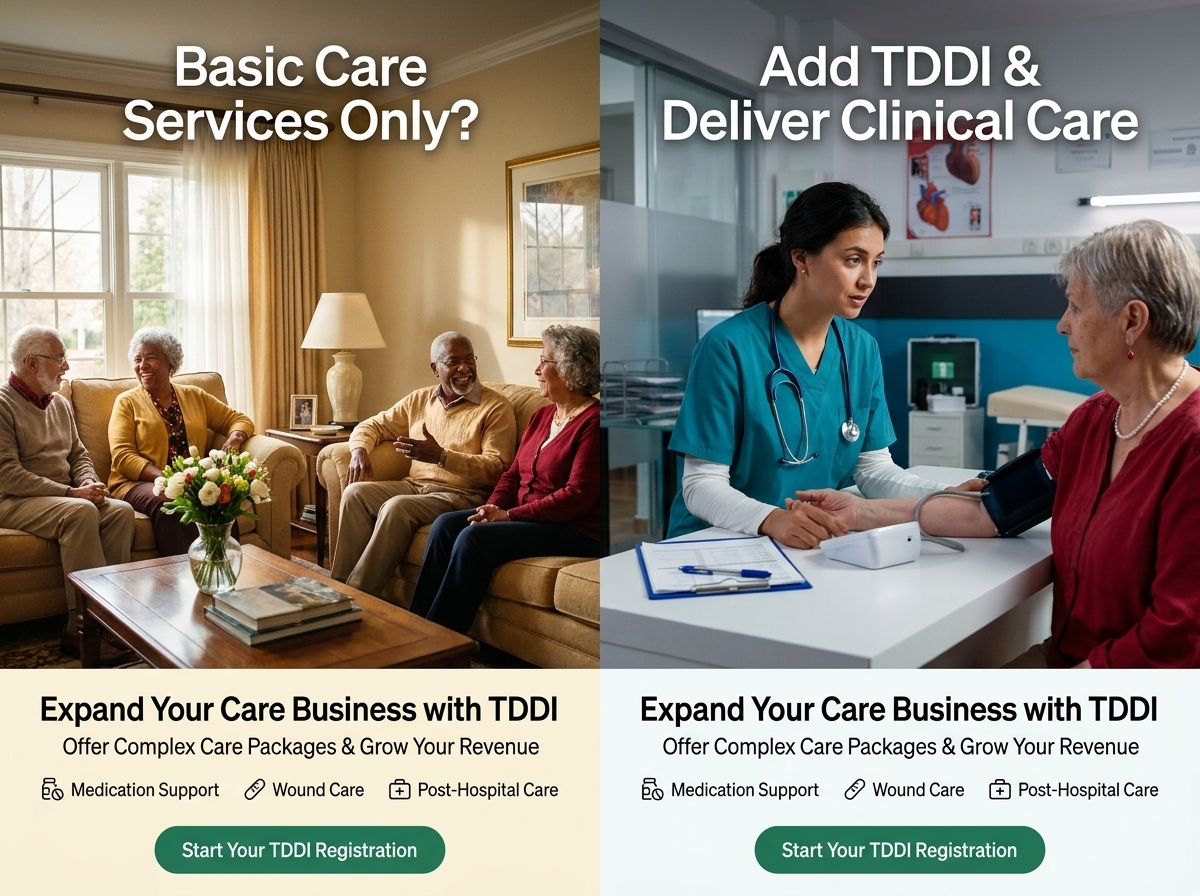
Book a free consultancy session today to discuss expanding your service with TDDI. Click on the link to get started or call us on 07508823495 and request to speak tro one of our consultants.

FAQ schema-ready questions

1. What is TDDI registration?

TDDI registration is the CQC regulated activity for Treatment of Disease, Disorder and Injury, which may be needed for certain care services.

2. Why do providers get TDDI registration wrong?

Providers often get it wrong because they use generic paperwork, misunderstand the activity, or fail to show proper governance and training arrangements.

3. Can TDDI registration delay my service launch?

Yes. If the application is incomplete or inconsistent, the CQC may ask for more information, which can slow approval.

4. What documents are important for TDDI registration?

Important documents usually include the Statement of Purpose, policies, governance evidence, and staff training plans.

5. How can I avoid TDDI registration mistakes?

You can avoid mistakes by confirming the regulated activity, tailoring your documents, and checking all evidence for consistency.

6. Does TDDI registration help service expansion?

Yes. It can allow a provider to deliver more complex support and open up new growth opportunities.

7. Is TDDI registration difficult?

It can be detailed and compliance-heavy, but it becomes much easier with the right preparation and accurate documentation.

CQC Registration Rejection: Common Mistakes and How to Prevent Them

CQC Registration Rejection

Introduction

CQC Registration delays and rejection can seriously disrupt a care business launch. In many cases, the issue is not the service idea itself, but weak preparation, missing evidence, or inconsistencies in the application.

A strong application shows clearly that the service is ready, compliant, and safe from day one.

What causes CQC registration delays?

CQC registration delays often happen when the application is incomplete or unclear. The regulator may pause the process if documents do not match, policies are missing, or the service model is not properly explained.

Common delay triggers include:

  • Incomplete application forms.
  • Missing supporting documents.
  • Weak or generic Statement of Purpose.
  • Policies that do not reflect the actual service.
  • Unclear leadership or management arrangements.
  • Slow responses to CQC requests for more information.

Even small errors can add weeks to the CQC Registration delays process, especially when the CQC needs clarification before moving forward.

Why CQC applications get rejected

CQC applications are more likely to be rejected when the provider cannot prove it is ready to meet legal and regulatory requirements. This usually happens when the application lacks detail, contains contradictions, or does not show a safe operating model.

Typical rejection reasons include:

  • Incorrect regulated activities selected.
  • Poorly matched policies and procedures.
  • Inadequate evidence of governance.
  • Insufficient experience for the registered manager.
  • No clear plans for quality assurance.
  • Financial or operational instability.

A rejection can be costly because it delays launch, affects business planning, and may require a full rework of the application.

How to avoid costly mistakes

The best way to avoid delay or rejection is to treat the registration as a compliance project, not just an admin task. Every part of the application should be checked for consistency and supported with evidence.

Use this approach:

  1. Review the service model carefully before applying.
  2. Make sure the Statement of Purpose is specific and accurate.
  3. Align policies with the actual way the service will operate.
  4. Check that the registered manager’s details and evidence are complete.
  5. Prepare governance, safeguarding, and quality systems in advance.
  6. Respond quickly to any CQC follow-up questions.

A strong application should make it easy for the CQC to understand who you are, what you do, and how you will keep people safe.

How long CQC registration takes

CQC registration is not instant, and the timeline depends on the quality of the application and how quickly queries are resolved. If the application is straightforward and well prepared, the process is much smoother.

However, delays can happen at any stage, especially if the CQC needs extra information. That is why providers should plan ahead and avoid submitting rushed or incomplete paperwork.

Signs your application may need work

If you notice any of the following, your application may be at higher risk:

  • The service description feels too broad.
  • The policies look generic.
  • The leadership structure is unclear.
  • There is no clear evidence of oversight.
  • The application form and supporting documents say different things.

These warning signs should be fixed before submission, not after the CQC starts reviewing the file.

Best practices for a stronger application

A better application is usually one that is clear, consistent, and evidence-led. The CQC wants to see that the provider understands the service model and has practical systems in place to manage safety and quality.

Focus on:

  • Clear structure and ownership.
  • Accurate documents across every section.
  • Realistic operational plans.
  • Evidence of training and supervision.
  • Strong governance and risk management.
  • Prompt communication throughout the process.

If your application is easy to understand, it is easier for the regulator to approve it.

Book a free consulting session to discuss your cqc registration specific requirements, Click on the link to get started or call us on 07508823495 and request to speak tro one of our consultants.

FAQ schema-ready questions

1. What causes delays in CQC registration?

Delays are often caused by incomplete forms, missing documents, inconsistent information, or slow responses to CQC questions.

2. Why would a CQC application be rejected?

A CQC application may be rejected if the provider cannot show that the service is ready, compliant, and safe to operate.

3. How can I avoid CQC registration mistakes?

You can avoid mistakes by preparing complete evidence, matching all documents, and making sure the service model is clearly explained.

4. How long does CQC registration take?

The timeline depends on application quality, the type of service, and whether the CQC requests more information during review.

5. What documents are most important for CQC registration?

The most important documents usually include the statement of purpose , policies and procedures, governance evidence, and leadership details.

6. Can a weak registered manager application cause problems?

Yes. If the registered manager’s experience, qualifications, or role is unclear, the application may be delayed or refused.

7. What is the safest way to prepare for CQC registration?

The safest approach is to build the application around clear evidence, aligned documents, and a realistic operating model.

CQC Registration: A Step‑by‑Step Guide for New and Growing Care Providers

CQC Registration: A Step‑by‑Step Guide for New and Growing Care Providers

Starting CQC registration can feel overwhelming, especially when you’re building a home care agency or expanding domiciliary care services. Each step—from choosing regulated activities to preparing for the Fit Person Interview—requires careful attention and clear understanding. This guide breaks down the process into manageable stages, showing how Hellocare Consulting supports your application, interview preparation, Provider Information Return, and service growth, including adding TDDI and children’s services. Ready to move forward with confidence?

Understanding CQC Registration

Beginning with CQC registration involves understanding the essentials that ensure your care service meets quality standards. Let’s explore each stage for a clear path.

Navigating the Application Process

Starting your application is the first step. You’ll complete forms detailing your service. This includes your Provider Information Return, where every detail matters. Missing information can delay progress, so ensure every section is complete. Each form asks for specifics about your service, like service type and location. Be precise, as this sets the foundation for success. Most providers worry about errors, but careful review reduces stress. Double-check each entry for peace of mind.

Key Regulated Activities Explained

Understanding regulated activities is crucial. These are the services you’re permitted to offer. They range from personal care to more complex activities. Knowing each category helps tailor your application. For example, adding Treatment of Disease, Disorder, and Injury (TDDI) allows for expanded care but requires extra documentation. This step is about aligning your services with regulatory expectations, ensuring you can meet your community’s needs.

Ensuring CQC Compliance Foundations

Compliance is about more than ticking boxes. It’s about embedding quality throughout your service. This involves regular checks and updates to your procedures. Keeping updated on CQC guidelines is essential. Compliance ensures safety and quality, which builds trust with clients. Regular internal audits and staff training form the backbone of a compliant service.

Preparing for the CQC Interview

With your application underway, the next step is preparing for the interview. This stage can make or break your approval.

Mastering the Fit Person Interview

The Fit Person Interview tests your readiness. It’s where you demonstrate your understanding of CQC standards. Prepare thoroughly by reviewing typical questions. Focus on how your service meets each standard. Most assume it’s simple, but preparation is key. Practising answers boosts confidence. Remember, this is your chance to showcase your commitment to quality care.

CQC Interview Preparation Tips

Preparation involves understanding what inspectors expect. They look for evidence of safe, caring, and well-led services. Bring examples of how your service meets these criteria. Use specific cases to highlight your strengths. Think of it as telling your story. Most interviews hinge on real-world examples, so gather evidence early. This shows you’re not just ready in theory but in practice.

Mock Interview Insights

Mock interviews are invaluable. They simulate the real thing, providing practice in a safe environment. They help identify areas needing improvement. Use them to refine your answers and build confidence. It’s like a dress rehearsal for the big day. Many find this step transforms their approach, turning nerves into readiness.

Expanding Your Care Services

Once registered, consider expanding your services. This opens new opportunities and meets broader community needs.

Adding TDDI and Children’s Services

Expanding into TDDI and children’s services diversifies your offerings. Each addition requires specific compliance steps. Ensure your policies reflect these new areas. This expansion involves more than paperwork; it’s about preparing your team and infrastructure to handle new challenges. This step distinguishes your agency, meeting diverse client needs.

Supporting Learning Disability and Autism

Providing services for learning disabilities and autism requires specialised knowledge. Training your team is crucial. This ensures your service can effectively support these clients. Developing tailored programs improves care quality and meets CQC standards. It’s about understanding and adapting to specific client needs, which enhances service impact.

Hellocare Consulting’s Role in Growth

Hellocare Consulting supports your growth journey. From initial application to service expansion, they provide expert guidance. Their tailored approach ensures you meet all CQC standards, with a focus on quality and compliance. With their support, you navigate complexities with ease, paving the way for successful service expansion.

Avoid penalties and missed growth by acting promptly with Hellocare’s expert support for your care agency.

CQC Registration in 2026: A Practical Guide to Navigating Challenges and Managing Costs

CQC Registration in 2026: A Practical Guide to Navigating Challenges and Managing Costs

CQC registration in 2026 is proving more challenging than ever, with rising costs and tougher requirements shaping the process. If you’re preparing your home care or domiciliary care agency for registration or planning to add children’s or TDDI services, understanding each step is crucial. This guide breaks down what you need to know about managing expenses and overcoming common hurdles, plus how Hellocare Consulting can provide tailored support to strengthen your application and boost your readiness. Learn more about avoiding CQC registration setbacks here.

Navigating CQC Registration Challenges

The journey through CQC registration can be daunting, but it’s essential to tackle each challenge head-on. Let’s start by understanding the CQC Quality Statements.

Understanding CQC Quality Statements

CQC Quality Statements are the backbone of your registration. They outline the standards your service must meet. These statements focus on safe, caring, and effective service delivery. Understanding them is the first step to success.

You need to integrate these statements into everyday practices. This means ensuring your policies reflect these standards. For instance, if your service involves treating diseases, your procedures must show how you maintain safety and quality in treatment. Most people think they can skip this step, but it’s crucial for a strong application.

Here’s the key insight: Consistently apply the Quality Statements to improve your service and boost your chances of passing the CQC registration. When you align your operations with these statements, you’re not only meeting regulatory expectations but also enhancing the quality of care. Discover more insights on CQC registration here.

Preparing for CQC Fit Person Interview

The Fit Person Interview is your chance to demonstrate your capability as a service provider. Be ready to discuss how you uphold CQC standards. It’s like a test of your understanding and commitment.

Start by familiarizing yourself with potential questions. Practice responses that illustrate your knowledge and readiness. A mock interview can be a helpful tool. It’s a chance to rehearse and refine your answers. Most providers underestimate the power of preparation, but it can make all the difference.

To excel, focus on portraying confidence and competence. Highlight your experience and understanding of the CQC principles. This way, you’ll approach the interview with assurance, ready to showcase your dedication to quality care.

Addressing Registered Manager Requirements

The role of a Registered Manager is pivotal. They oversee daily operations, ensuring compliance and quality. Meeting the criteria for this position is imperative.

A Registered Manager must possess the right qualifications and experience. They should be well-versed in CQC standards. Having a robust background in care management strengthens your application. Don’t let common myths about this role mislead you; it demands a solid foundation in care principles.

For your agency, the Registered Manager acts as the linchpin. They ensure everything runs smoothly, from compliance to staff management. By fulfilling these requirements, you secure a crucial component of your registration process.

Managing CQC Application Costs

Understanding the costs involved in CQC registration is as crucial as the process itself. Knowing what to budget for can save you from unexpected financial burdens.

Estimating CQC Registration Costs UK

Before diving in, it’s critical to get a clear picture of the costs. Registration fees, along with costs for required documents, can add up. On average, agencies might spend a few thousand pounds. Having a realistic budget helps in setting proper expectations.

Consider factors like location and the scale of your operations. These can influence the overall fees. It’s essential to be thorough in your estimates. Many agencies encounter surprises due to overlooked expenses.

To prevent this, break down your costs into categories. This includes application fees, document preparation, and additional consultancy services. This structured approach ensures you’re prepared for every financial aspect of registration.

Budgeting for Policies and Procedures

Policies and procedures are vital components of your application. They need to be comprehensive and align with CQC standards. This requires investment in both time and resources.

Drafting these documents can be cost-effective if done strategically. Utilize templates and expert guidance to streamline the process. Investing in well-prepared documents upfront can save money in the long run by avoiding revisions.

Remember, these documents serve as a blueprint for your service. They guide operations and ensure compliance. Proper budgeting here ensures you have a strong foundation for your CQC registration.

Cost-effective Provider Information Return Support

The Provider Information Return (PIR) is a crucial part of staying inspection-ready. Completing it accurately is essential, yet it doesn’t have to be costly.

Seek support that offers value without breaking the bank. Hellocare Consulting provides tailored assistance in completing your PIR. This support is designed to be both comprehensive and affordable.

By accessing expert help, you can ensure your PIR is completed accurately, reducing the risk of errors. This proactive approach keeps your service compliant and ready for any CQC inspections.

Expanding Care Services in 2026

Expanding your care services offers new opportunities. Adding children’s services or TDDI can diversify your offerings and enhance client satisfaction.

Adding Children’s Services CQC

Incorporating children’s services into your existing framework can be rewarding. It opens doors to new contracts and enhances your service scope. However, it requires careful planning and adherence to strict guidelines.

Ensure you meet all safeguarding requirements. This includes staff training and updated policies. The process might seem daunting, but the benefits outweigh the challenges. Most providers believe it’s a lengthy process, yet with the right guidance, it’s manageable.

Focus on building a solid framework that supports both children and staff. This ensures a smooth transition and compliance with CQC standards.

TDDI Regulated Activity Application

Adding Treatment of Diseases, Disorder, and Injury (TDDI) to your services can elevate your care offerings. It allows you to cater to clients requiring specialized care, increasing your agency’s appeal.

This step involves rigorous compliance with CQC regulations. Prepare thoroughly to meet all required standards. Develop policies that ensure safe and effective treatment delivery. This boosts your agency’s reputation and trustworthiness.

By expanding into TDDI, you’re not just adding a service. You’re enhancing your agency’s capability to provide comprehensive care solutions tailored to client needs.

Launching a Care Business Start-Up UK

Starting a care business in the UK is a significant venture. It requires a firm understanding of CQC regulations and strategic planning. The initial phase involves setting up a solid business model and gathering the necessary resources.

Identify the needs of your target market. This informs your service offerings and business strategies. Tailor your business plan to reflect these insights, keeping in mind CQC standards.

Launching a care business is a rewarding journey. By focusing on quality and compliance, you lay the groundwork for a successful and sustainable operation. Ready to embark on this path? Ensure you have the right support system in place to guide you through the complexities of registration and expansion.

Prepare your agency for confident CQC registration with our expert guidance.